


Tea Details
+
Tea Details

Harvest: April 2026
Region: Jiulian Village, Shangpu Town, Shangyu, Shaoxing, Zhejiang, China
Elevation: ~200 m above sea level
Cultivar: Zhonghuang 1 (中黄1号)
Crafting Highlight: Sealed yellowing
Storage Tips: Store in an airtight container away from heat and light
Shelf Life: 24 months at room temperature; 2–3 years refrigerated
Brewing Guide
+
Brewing Guide


Why Does This Tea Taste Like Pineapple?
+
Why Does This Tea Taste Like Pineapple?

Nothing has been added—this is 100% pure loose-leaf tea, with no fruit, flavoring, or added aroma.
Fruity notes can occur naturally in tea, but a character this distinctly reminiscent of pineapple is relatively uncommon. A tea’s aroma is shaped by many factors working together, including the cultivar, growing conditions and weather, harvest, and processing.
In this batch, Zhonghuang 1 (中黄1号) leaves combined with the yellowing process developed an unusually vivid tropical fruit profile. The pineapple note is especially clear, with impressions of mango and passion fruit emerging alongside it.
It may taste like fruit, but everything in the cup comes from the tea leaf itself.
What Is Zhonghuang 1 (中黄1号)?
+
What Is Zhonghuang 1 (中黄1号)?

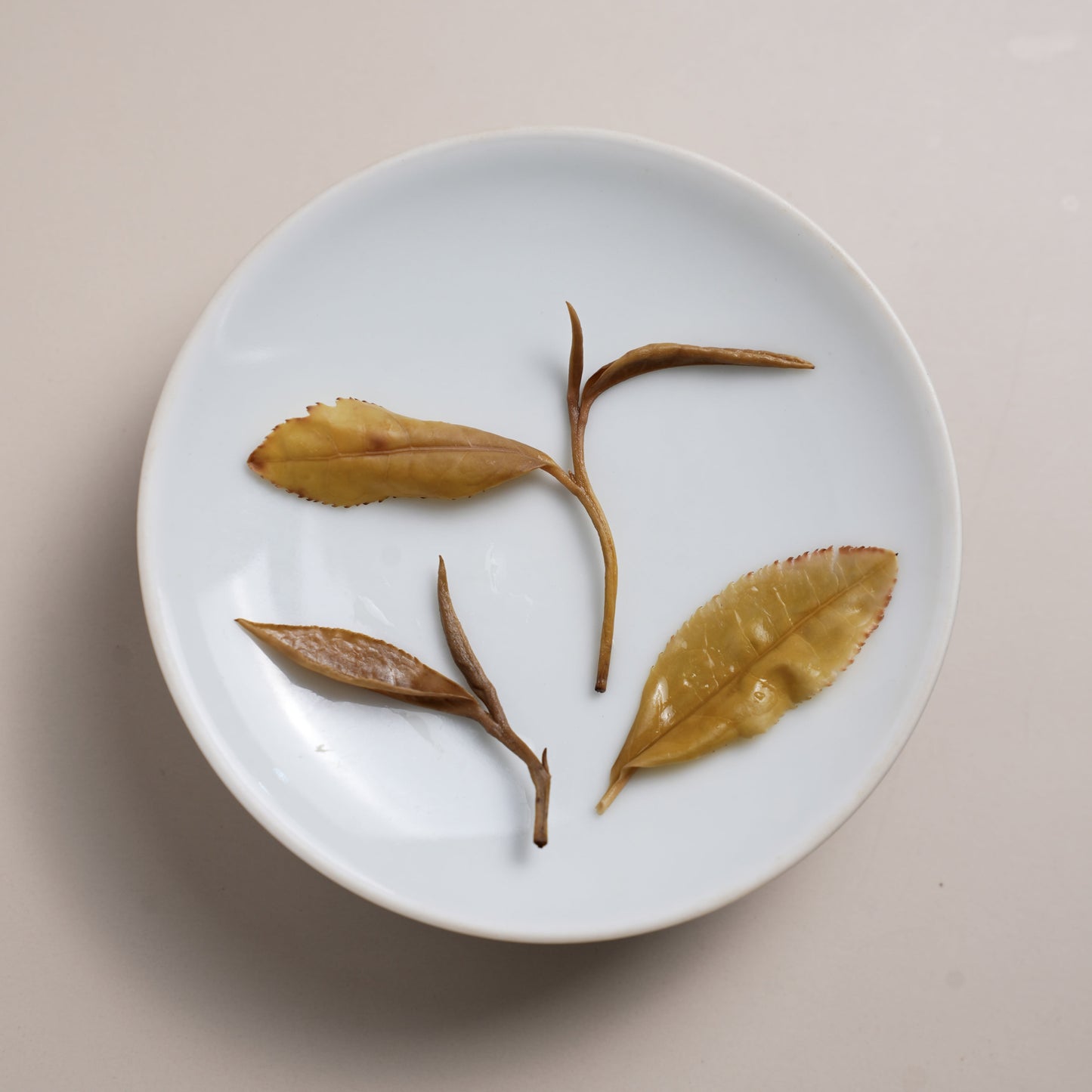
Zhonghuang 1 (中黄1号) is a naturally yellow-leaf tea cultivar selected from a spontaneous mutation found in a local seed-grown tea population in Tiantai, Zhejiang. Under stronger light, its young shoots develop their distinctive pale yellow color.
But the color isn’t what makes Zhonghuang 1 special in the cup. Its young leaves are naturally rich in free amino acids, including theanine, giving the tea a fresh, soft, and naturally sweet foundation.
That gentle character also makes Zhonghuang 1 an interesting raw material for yellow tea. Combined with the yellowing process, it creates the smooth, sweet base behind the vivid tropical fruit character of this batch.
What Makes It a Yellow Tea?
+
What Makes It a Yellow Tea?

Yellow tea begins much like green tea, but adds one defining step: yellowing (闷黄). During this controlled resting process, the leaves are kept warm and slightly humid, gradually softening the fresh, grassy character of the tea and creating a rounder, mellower cup.
Pineapple Yellow uses a yellowing approach inspired by the traditional processing of Pingyang Huangtang (平阳黄汤)—the same foundation behind our Pearl Yellow Tea, but with a very different raw material.
Pearl Yellow begins with a traditional seed-grown Zhejiang cultivar, giving it a mellow, floral, and softly savory character. Pineapple Yellow begins with Zhonghuang 1 (中黄1号), creating a sweeter, brighter expression with an unexpectedly tropical fruit profile.
Same craft. Different leaves. A completely different cup.
Want to explore the yellowing process in more depth? [Discover Pearl Yellow Tea →]
Naturally Sweet—and Hard to Overbrew
+
Naturally Sweet—and Hard to Overbrew

Unlike many teas, Pineapple Yellow is not heavily rolled or shaped during processing. With the leaves left largely intact, their flavor releases more gradually into the water—making this tea especially forgiving of longer steeps.
Zhonghuang 1 (中黄1号) also brings a naturally soft, sweet foundation, rich in the fresh, savory-sweet character associated with its high amino acid content. Together, the intact leaf structure and gentle cultivar character create a tea that is difficult to rush and easy to enjoy.
Around 3 g can comfortably carry through multiple infusions, with the tropical fruit notes unfolding gradually from steep to steep.